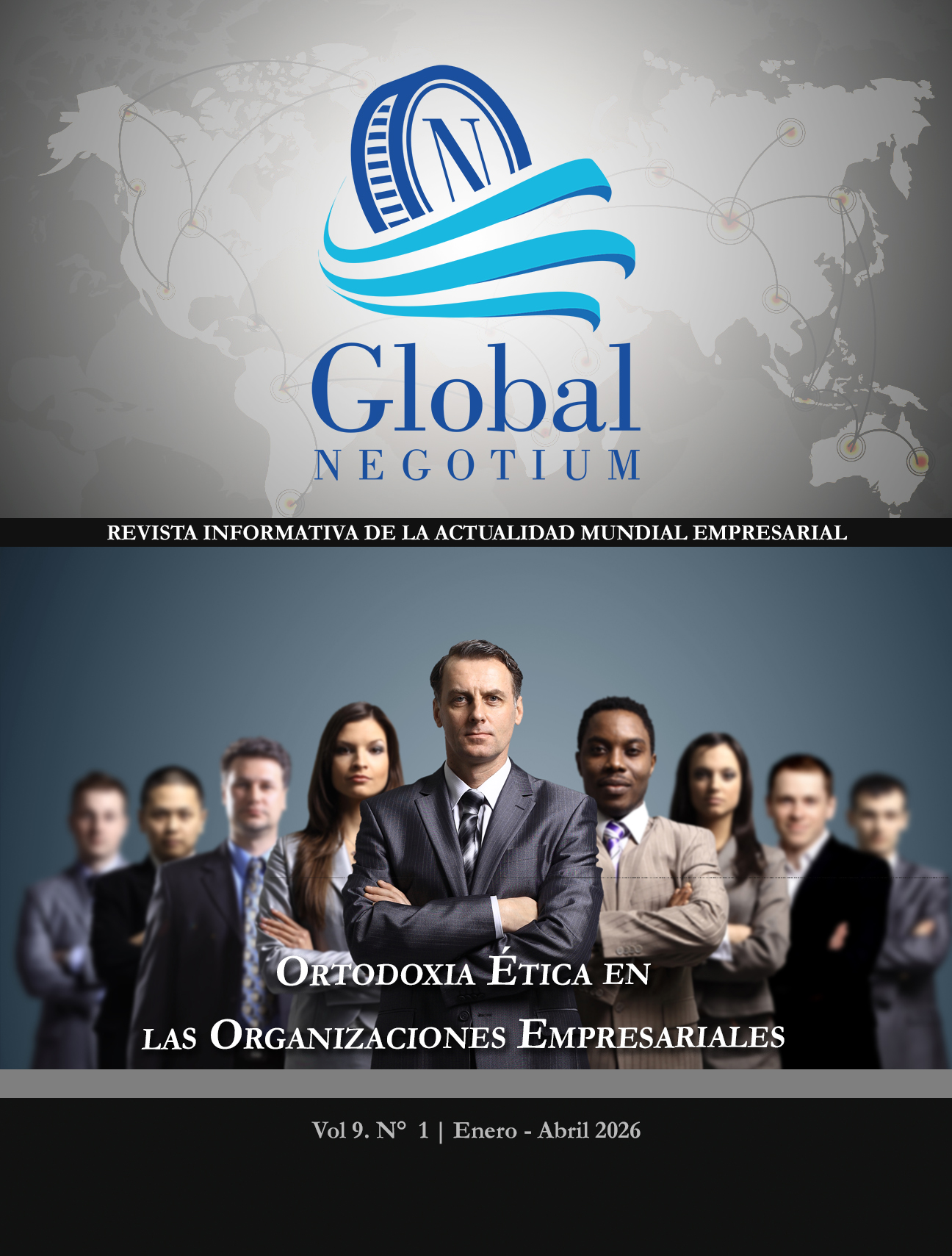
ORTODOXIA ÉTICA: UNA CONSIDERACIÓN CONSCIENTE DESDE LA ÓPTICA DE LA DIRECCIÓN UNIVERSITARIA
DOI:
https://doi.org/10.53485/rgn.v9i1.701Palabras clave:
Ortodoxia ética, programas de formación, Dirección UniversitariaResumen
El presente artículo es el resultado de una investigación, el cual tiene como objeto presentar un contraste teórico que invite a la reflexión de la ortodoxia ética desde la óptica de la Dirección Universitaria. Por tanto, la ortodoxia ética implica la normatividad de los actos humanos, la cual exige deliberar de forma consciente los problemas sociales, gerenciales y organizacionales. Se refiere a la aplicación estricta de normas y procesos de control basada en la disciplina y el método. En ese sentido el artículo, insta a la gerencia en su dirección universitaria a encaminar sus esfuerzos a cumplir a cabalidad con la responsabilidad ética de diseñar e implementar programas de formación cónsonos a las nuevas realidades y exigencias gerenciales y empresariales, que tengan como objetivo fundamental el desarrollo de las competencias necesarias para que, quienes reciban esa formación cumplan con eficiencia y eficacia, pero sobre todo con efectividad, los roles que les corresponda cumplir en el ámbito organizacional. Los postulados teóricos se basan en los fundamentos desarrollados por Seijo, Ochoa y Ochoa (2024), Castro (2018), Duque (2019), Etkin (2015), Sanabria (2016), entre otros. La metodología se basó en una revisión documental y bibliográfica, complementada por el análisis hermenéutico de casos hipotéticos para contextualizar los hallazgos. Los resultados revelan que un enfoque sistémico puede mejorar la calidad y equidad educativa, desarrollando competencias esenciales para el siglo XXI. El estudio concluye que el aprendizaje híbrido con una visión a largo plazo y la colaboración de todos los actores, puede transformar la educación a nivel global.
Referencias
Publicado
Número
Sección
Licencia
Derechos de autor © 2026 Cristian Torres, Cristina Seijo

Esta obra está bajo una licencia internacional Creative Commons Atribución-NoComercial-CompartirIgual 4.0.